
 Войти
ВойтиBrazil’s forest production reaches record BRL 47.9 billion in 2025
Brazil’s forests generated an economic output valued at BRL 47.9 billion in 2025 – the highest figure ever recorded in Brazil, up 6.7 percent from the previous year.

The data cover natural or planted forests and are part of a survey released Thursday (Sep. 24) by the statistics bureau IBGE.
The institute takes into account silviculture – when production comes from planted areas – and extractive activities, which refer to originally natural green areas.
Silviculture soars
Silviculture jumped 8.6 percent from 2024 to 2025, reaching BRL 41 billion. Plant extraction moved in the opposite direction and fell 3.1 percent, totaling BRL 6.9 billion.
In the late 1990s, silviculture and extractive activities alternated as the main drivers of forest production. Since then, however, production from planted areas has skyrocketed, reaching 85.6 percent in 2025, leaving only 14.4 percent for plant extraction.
The survey notes that, since 2019, the economic value of silviculture has grown by 165 percent. According to the institute, this is due to technological advances. In 2025, planted forests totaled 10.4 million hectares (104,000 km²).

Eucalyptus and cellulose
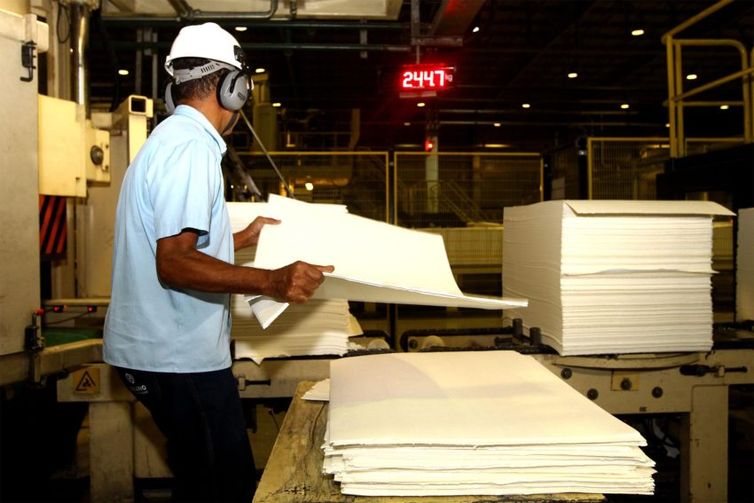
Of this area, 78.6 percent is planted with eucalyptus, a fast-growing tree maturing in about seven to eight years, used primarily in the manufacture of cellulose, a key raw material for paper production.
Brazil’s silviculture makes the country the world’s largest producer and exporter of cellulose, a position it has held since 2022, when it surpassed Canada.
The study also reports that Brazil’s global prominence is driven by climatic conditions and soil that are favorable to rapid forest growth, as well as “investments in sustainable practices, which make it highly competitive in the international market.”
In 2025, Brazil produced 22.2 million metric tons of cellulose, 12.7 percent more than in the previous year.
In terms of value, the figure was USD 10.2 billion – a 3.9 percent decline over the past year. As a commodity, the price of cellulose is directly influenced by the global market.
The IBGE explains that prices fell due to “global oversupply, a slowdown in Chinese consumption and the resulting increase in inventories, and exchange rate factors, such as the appreciation of the real.”
Cellulose was Brazil’s eighth-largest export in 2025. The top three exports, in order, were petroleum, soybeans, and iron ore.
Food products
The report also found that food products accounted for BRL 2.2 billion in production value.
Half of this amount came from açaí (251,000 metric tons), with two-thirds of this production (66.7%) coming from the Northern state of Pará.
Yerba mate ranked second among non-timber products, with BRL 562.3 million. Of all the yerba mate harvested in the country, 88.4 percent came from the state of Paraná, in South Brazil.



