Вид для чтения

Появились новые статьи. Нажмите, чтобы обновить страницу.

Malaria deaths in Yanomami territory fall 80% in 2025, government says

Logo Agência Brasil

The Ministry of Health this week released a new report on the situation of indigenous peoples in the Yanomami territory in Roraima, the country’s largest indigenous territory. It recorded an 80.8 percent reduction in malaria-related deaths between January 2023 and the end of 2025, after the Brazilian government declared a Public Health Emergency of National Importance (ESPIN) to address the humanitarian crisis caused by the invasion of illegal gold miners.

The report cites a 75.9 percent increase in the number of tests conducted through active case finding. Testing for the disease also rose from 144,986 to 257,930 in 2025.

Notícias relacionadas:

Deaths from malnutrition fell by a significant 53.2 percent between 2023 and 2025. During the same period, the share of children under five with adequate weight increased from 45.4 percent to 53.8 percent, according to the report.

There was an increase in the number of children receiving regular follow-up care from health teams, rising from 70.1 percent to 85.1 percent. Severe malnutrition also declined, with the share of children who were severely underweight falling from 24.2 percent to 15.2 percent during the period.

The number of consultations for acute respiratory infections increased by 254 percent between 2023 and 2025. As a result, the disease’s case fatality rate fell by 76 percent, while the number of deaths declined by 16.7 percent since the start of the Public Health Emergency response.

Mães com bebês indígenas Yanomami nos arredores da Casa de Saúde do Índio, que presta acolhimento aos indígenas trazidos em situação de emergência para Boa VistaMães com bebês indígenas Yanomami nos arredores da Casa de Saúde do Índio, que presta acolhimento aos indígenas trazidos em situação de emergência para Boa Vista
Severe malnutrition also declined, with the share of children who were severely underweight falling from 24.2 percent to 15.2 percent - Fernando Frazão/Agência Brasil

Vaccines

In the area of immunization, the Ministry of Health confirmed a 40 percent increase in the number of doses administered in 2025 compared with 2023, rising from 31,999 to 44,754. The percentage of children under one year of age with a complete vaccination schedule more than doubled during the period, rising from 27 percent in 2023 to 60.6 percent in 2025. Among children under five, the rate grew from 47.4 percent to 78.3 percent, reflecting stronger routine vaccination efforts.

According to the Ministry’s Secretary of Indigenous Health, Lucinha Tremembé, the results reflect expanded access to healthcare in the territory, reaffirming the government’s commitment to protecting lives and promoting the health of indigenous peoples.

“We are making steady progress in improving health in the Yanomami territory, with a reduction in deaths and, above all, in deaths from preventable causes such as malnutrition and malaria. These results reflect the current administration’s ongoing effort to strengthen the Brazilian government’s presence, ensuring comprehensive, high-quality care that respects the cultural specificities of indigenous peoples,” she noted.

Atendimento aos indígenas Yanomami trazidos ao Hospital de Campanha da Força Aérea Brasileira, instalado na na Casa de Saúde do Índio, em Boa Vista.Atendimento aos indígenas Yanomami trazidos ao Hospital de Campanha da Força Aérea Brasileira, instalado na na Casa de Saúde do Índio, em Boa Vista.
The number of professionals has more than tripled, rising from 690 to over 2,130 workers deployed directly in villages - Fernando Frazão/Agência Brasil

Health services

Among the advances highlighted by the Brazilian government is the expansion of the healthcare workforce in the territory. Since the start of the health emergency, the number of professionals has more than tripled, rising from 690 to over 2,130 workers deployed directly in villages, at the Indigenous Health Center (CASAI) in Boa Vista, and within the facilities of the Yanomami Special Indigenous Health District.

In the area of infrastructure, the Yanomami Center for Emergency Public Health Operations highlighted the completion of 261 interventions in water supply systems, along with the installation of more than 1,400 filters, helping expand access to safe water.

The government also installed 61 solar energy systems and upgraded health facilities, strengthening the foundation for primary care in the territory.

Another important milestone during the national emergency period was the renovation and expansion of the Indigenous Health Reference Center (CRSI) at the Surucucu base camp, deep inside the territory.

Since its restructuring, the facility - which serves as a reference point within the indigenous territory - has provided 4,374 outpatient consultations. Of these, 2,081 were laboratory tests and 328 were ultrasound exams. The facility serves 48 communities and handles most patient transfers to higher-capacity healthcare facilities in the region.

“This specialized infrastructure has helped improve clinical management, strengthen community ties, and streamline care pathways,” the Ministry of Health said in the statement.

Study on autism in Brazil highlights limited access to diagnosis

Logo Agência Brasil

A study entitled Mapa Autismo Brasil (MAB) – “Brazil’s Autism Map” – the first national sociodemographic profile of people with autism, released this week, reveals that access to diagnosis and therapies in Brazil remains limited.

Published by Institute Autismos, the study surveyed people with autism and their caregivers across all Brazilian states with the aim of identifying the profile of Brazilians with autism and the services to which they have access.

Notícias relacionadas:

The data show that, even though about a quarter of the Brazilian population has access to health insurance, only 20.4 percent of those surveyed reported having received a confirmed diagnosis of autism spectrum disorder (ASD) through the national health care network, the SUS.

The study also indicates that only 15.5 percent of respondents said they receive therapy through the public health system, while more than 60 percent reported using health insurance plans or paying privately to access the service.

In a statement, the institute says that the issue is even more widespread.

“The results of Brazil’s Autism Map also reveal that 56.5 percent of respondents (including those using the SUS and the private sector) reported that the autistic person in question (the respondent themselves or the person under their care) receives up to two hours of therapy per week, which falls short of international recommendations – which call for multidisciplinary therapies and a high weekly workload.”

Analysis

In May 2025, Brazil’s statistics bureau IBGE for the first time released data from the 2022 census which identified 2.4 million people with ASD in Brazil – 1.2 percent of the Brazilian population.

“Unlike the census, Brazil’s Autism Map conducts a socioeconomic analysis and gauges access to services for people with autism and their caregivers, contributing to an evaluation of the current landscape and highlighting the need for improvements in public policies,” the institute noted.

Diagnosis

Brazil’s Autism Map reveals difficulties in accessing ASD diagnosis through the SUS as well as delays in diagnosis in general, which hinders early interventions.

The results indicate a concentration of diagnoses in the age group up to four years (51.7%), followed by 5–9-year-olds (17.1%) and 10–14-year-olds (6.1%).

“The difference between the median (four years) and the mean (11 years) reveals that, although most diagnoses occur early, there is still a significant number of diagnoses made at older ages, which raise the sample’s mean,” the institute warned.

The study also found that the first signs of ASD are most often noticed by close family members (55.9%) or by the autistic person themselves (11.4%), while doctors and teachers identified the first signs in only 7.3 and 9.4 percent of cases respectively.

According to the study, neurologists or pediatric neurologists were responsible for the diagnosis in 67 percent of cases, followed by psychiatrists (22.9%), which, according to the institute, highlights the need for access to specialists, who are not always available publicly or even privately in some areas.

The data show that 55.2 percent of diagnoses were made in the private healthcare system, 23 percent through health insurance plans, and only 20.4 percent through the SUS, with proportions varying across different regions of Brazil – the study indicates greater reliance on the SUS for diagnosis in the North and Northeast.

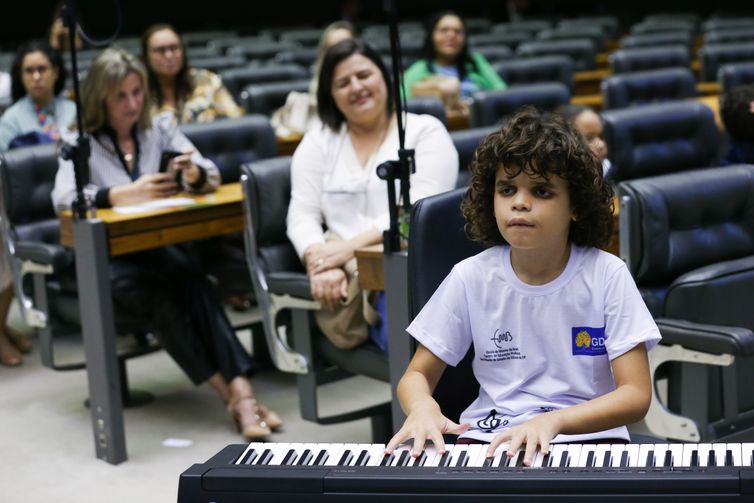
Brasília (DF) 03/04/2023 Sessão solene na Câmara dos Deputados em Homenagem Dia Mundial de Conscientização do AutismoBrasília (DF) 03/04/2023 Sessão solene na Câmara dos Deputados em Homenagem Dia Mundial de Conscientização do Autismo
Of the total, 83.7 percent reported attending an educational institution, with 52.26 percent attending public schools and 31 percent attending private schools - Lula Marques/ Agência Brasil

School and adult life

The results also provide a snapshot of access to education. Of the total, 83.7 percent reported attending an educational institution, with 52.26 percent attending public schools and 31 percent attending private schools, while 16 percent said they did not attend any institution.

Regarding accessibility and inclusion resources, 39.9 percent reported receiving no support whatsoever. Among the most common forms of support are social educators, monitors, or tutors (23.8%), specialized support such as school mediators or therapeutic assistants (18.8%), pedagogical adaptations (18.8%), and resource rooms (18.1%).

“The data show that school attendance alone does not guarantee effective inclusion. The high proportion of students without basic support suggests weaknesses in the implementation of inclusive education policies and inequality in access to educational resources stipulated by law,” the institute reported.

Among those aged 18 to 76, 29.9 percent of autistic respondents reported being unemployed or without income, which, according to the institute, highlights a structural challenge to inclusion.

Among those who reported being employed, 21.1 percent work as civil servants, 20 percent have formal employment, 8.1 percent are self-employed, 6.7 percent operate as legal entities, and 5.9 percent work informally.

Additionally, 4.1 percent rely on government assistance, 3.5 percent receive a retirement or disability pension, and 0.35 percent are in the military.

Bolsonaro leaves ICU, discharge timeline still unclear

Logo Agência Brasil

Former President Jair Bolsonaro left the Intensive Care Unit (ICU) at DF Star Hospital in Brasília, where he is being treated for bilateral bacterial pneumonia following an episode of bronchoaspiration.

According to a medical bulletin released on Tuesday (Mar. 24), he remains hospitalized despite clinical improvement and continues to receive intravenous antibiotic therapy, clinical support, and respiratory and motor physiotherapy. No discharge date has been set.

Notícias relacionadas:

Also on Tuesday, Justice Alexandre de Moraes of the Supreme Federal Court granted former President Jair Bolsonaro 90 days of provisional house arrest, after which his health status will be reassessed.

Moraes granted the request submitted by the former president’s defense. According to his lawyers, Bolsonaro is unfit to return to prison due to a deterioration in his health.

The house arrest will begin upon Bolsonaro’s discharge from the hospital, where he has been since March 13.

❌