Вид для чтения

Появились новые статьи. Нажмите, чтобы обновить страницу.

Alckmin: Biodiesel reduces Brazil’s exposure to global geopolitics

Logo Agência Brasil

Brazil’s Vice President, Geraldo Alckmin, participated in the launch of the Biodiesel Alliance, formed by the Brazilian Association of Biofuel Producers (Aprobio) and the Brazilian Association of Vegetable Oil Industries (Abiove). The ceremony was held in Brasília on Wednesday (Apr. 8).

The partner organizations bring together 16 biodiesel manufacturers operating 33 active plants. According to the member companies, this represents 63.7 percent of Brazil’s biodiesel production capacity.

Notícias relacionadas:

For Alckmin, biodiesel is strategic, especially at a time when international conflicts affect the fuel market.

“Instead of importing diesel, which is highly susceptible to global geopolitics, we produce our own fuel here for our country,” he emphasized.

According to the vice president, Brazil is the only country in the world that blends 30 percent anhydrous ethanol into gasoline, in addition to having 85 percent of its vehicle fleet made up of flex-fuel vehicles - that is, vehicles that can run on either ethanol or gasoline.

In Alckmin’s view, the use of biodiesel improves air quality and reduces pollution, as well as cases of respiratory illness. “There is no agenda more positive than this one. It speaks to every sector.”

The vice president also pointed out that biodiesel production has social benefits because it involves small farmers and creates jobs throughout the industrial and service supply chain.

“If we are world champions in agriculture, if we have the most competitive and efficient tropical agriculture in the world, let’s add value: produce biofuels, help the environment and public health, generate jobs and income, avoid importing products, and strengthen our country’s economy,” he added.

Conflict

Alckmin also highlighted the Brazilian government’s initiatives to ensure fuel supplies and mitigate the impact of rising diesel and gasoline prices amid the conflict in the Middle East.

Among the initiatives are the suspension of federal taxes (PIS/Cofins) on petroleum products and a diesel subsidy in collaboration with states and municipalities. “Most states agreed,” he noted.

Brazil unveils national plan for bioeconomy

Logo Agência Brasil

The Brazilian government on Wednesday (Apr. 1) presented a new strategy to make biodiversity one of the country’s main economic assets for development by 2035. The National Bioeconomy Development Plan (PNDBio) is expected to encompass everyone from extractive workers to industry.

Among the goals are expanding payments for environmental services, incorporating new herbal medicines into Brazil’s national public health care network – the SUS – and granting new conservation units to promote ecotourism.

Notícias relacionadas:

The plan is organized into three pillars – socio-bioeconomics and environmental assets, competitive bioindustrialization, and sustainable biomass production.

Carina Pimenta, national secretary for the bioeconomy at the Ministry of the Environment and Climate Change, notes that this is a national development strategy that views environmental assets not only from the perspective of conservation, but also in terms of how to utilize them within economic activities, “generating a new cycle of prosperity.”

According to Minister of the Environment and Climate Change Marina Silva, the bioeconomy envisioned for Brazil is for everyone.

“There is a place for extractive industries, for cosmetics manufacturers, and for pharmaceutical companies. This is bioeconomy for a new cycle of prosperity,” she added.

Salvaterra (PA), 09/10/2025 - Valter dos Santos Barbosa, conhecido como Coroa, é um dos trabalhadores que fazem a colheita de açaí plantado em sistema de agrofloresta. Foto: Marcelo Camargo/Agência BrasilSalvaterra (PA), 09/10/2025 - Valter dos Santos Barbosa, conhecido como Coroa, é um dos trabalhadores que fazem a colheita de açaí plantado em sistema de agrofloresta. Foto: Marcelo Camargo/Agência Brasil
The first pillar outlines the development of a community-based socio-bioeconomic business ecosystem - Marcelo Camargo/Agência Brasil

Environmental services

The first pillar outlines the development of a community-based socio-bioeconomic business ecosystem. Among the initiatives are support for 6 thousand enterprises, a 20 percent increase in contracts under the financing line of the national program for strengthening family farming aimed at low-income producers, and a doubling of the gross annual output derived from socio-biodiversity.

Also planned is the promotion of environmental and socio-cultural services provided by traditional peoples and communities through payments to 300 thousand beneficiaries. Also proposed is a 50-percent increase by 2035 in the number of organizations eligible to receive benefits from the sharing of genetic resources. Genetic heritage is the set of data contained in plants, animals, and microorganisms used in the cosmetic, pharmaceutical, and other industries. Current legislation already stipulates that traditional communities, such as indigenous peoples, receive a share of these profits. The goal is to expand this distribution.

The initiative aims to restore 2.3 million hectares of native vegetation integrated into bioeconomy chains, in addition to consolidating 30 restoration territories across the country. The efforts also include granting 60 conservation units to promote ecotourism and expanding forest management areas to 5.28 million hectares.

Industry

Under bioindustrialization, the plan aims to focus on health and wellness through the sustainable use of genetic resources. It aims to incorporate new herbal medicines into the SUS and expand the share of such medicines in Brazil’s pharmaceutical industry revenue by five percent.

Manaus, 09/07/2024 Matérias primas e produtos produzidos pelo Centro de Bionegócios da Amazonia, CBA.  Foto: Fabio Rodrigues-Pozzebom/ Agência BrasilManaus, 09/07/2024 Matérias primas e produtos produzidos pelo Centro de Bionegócios da Amazonia, CBA.  Foto: Fabio Rodrigues-Pozzebom/ Agência Brasil
The third pillar is the use of biomass derived from agricultural and forestry products in the national industry - Fabio Rodrigues-Pozzebom/ Agência Brasil

Circular economy

The national plan also highlights, in its third pillar, the use of biomass derived from agricultural and forestry products in the national industry. Biomass is any organic material of plant or animal origin that can be used as an energy source. It also includes the development of the renewable biochemical industry, such as the production of biofuels, like ethanol.

“Innovative, competitive, export-oriented, and green – that’s what makes for a sustainable industry,” said Geraldo Alckmin, vice-president and minister of development, industry, trade, and services.

PNDBio is the result of two years of work involving 16 ministries, nonprofits, academia, and the private sector.

After undergoing public consultation with over 900 contributions, the public policy was finalized and approved on March 5, 2026, defining 185 strategic actions.

Lula christens first Gripen fighter jet made in Brazil

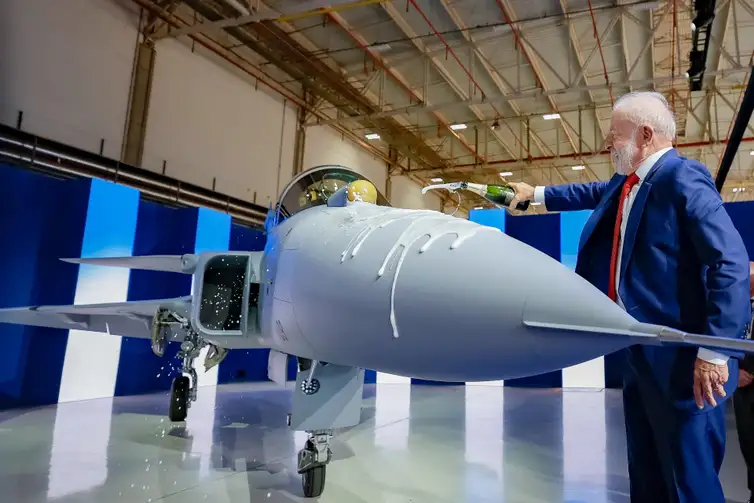
The first F-39E Gripen fighter jet produced in Brazil was presented Wednesday (Mar. 25) to President Luiz Inácio Lula da Silva. The christening ceremony for the supersonic aircraft, produced by Brazil’s plane maker Embraer and the Swedish Saab, took place at the Embraer Gavião Peixoto Airfield, in São Paulo state.

The production of the aircraft on Brazilian soil represents a milestone that places Brazil among “a select group of nations” capable of developing and producing highly complex combat aircraft – a first in Latin America – a note from the Planalto presidential palace says.

During the visit, Lula was also introduced to the eVTOL flying car. This prototype of a fully electric aircraft, which takes off and lands vertically, was developed by Embraer’s subsidiary Eve Air Mobility.

25.03.2026 - Presidente da República, Luiz Inácio Lula da Silva, durante a Cerimônia de apresentação do primeiro Caça F-39 E Gripen montado no Brasil, no Aeródromo Embraer – Unidade Gavião Peixoto - SP.

Foto: Ricardo Stuckert / PR25.03.2026 - Presidente da República, Luiz Inácio Lula da Silva, durante a Cerimônia de apresentação do primeiro Caça F-39 E Gripen montado no Brasil, no Aeródromo Embraer – Unidade Gavião Peixoto - SP.

Foto: Ricardo Stuckert / PR
Lula christens first Gripen fighter jet made in Brazil – Ricardo Stuckert / President’s Office

F-39 Gripen Fighter

The Brazilian Air Force believes the development of the F-39 Gripen fighter jet in Brazil will bring major benefits to the country.

It should strengthen air sovereignty, reducing dependence on foreign suppliers and boosting the Defense Industrial Base, as the contract includes technology transfer and the training of Brazilian professionals.

A large number of jobs will be created through this project, which integrates the domestic industry into the sector’s global supply chain, the Air Force stated. The program has generated more than 2 thousand direct jobs and some 10 thousand indirect jobs.

Innovation, technology and defense

Brazil’s vice-President Geraldo Alckmin, who attended the event, noted that the government has made BRL 108 billion available through the National Bank for Economic and Social Development (BNDES) for projects focused on innovation.

“Whoever masters technology masters the future,” said Alckmin, who also serves as minister of development, industry, trade, and services. “The defense industry is a safeguard for national sovereignty, as well as a leader in industrial development,” he added.

Defense Minister José Múcio highlighted, among the advantages of manufacturing the fighter jet in Brazil, access to cutting-edge technologies, which, he said, has a positive impact on the domestic industry.

“By investing in defense, our industry marks a milestone in maturity and competence, enabling Brazil to position itself as the largest manufacturing hub in Latin America. It will also consolidate our deterrent power, expanding our capacity to guarantee national sovereignty and regional security,” said the minister.

❌