
 Войти
ВойтиBrumadinho tragedy case heads to court after seven years



“I was a little confused. Then she called me and asked if my husband was home. I said he wasn’t; he was working. After that, she told me what had happened,” recalls Nayara in an interview with journalist Mara Régia on the program Natureza Viva, on Rádio Nacional, a station of Empresa Brasil de Comunicação (EBC). “Then it was total despair,” Nayara remembers.
Notícias relacionadas:
- Hearings over dam collapse in Brumadinho scheduled in Munich.
- UK court finds mining company BHP liable for dam collapse.
2,557 days
The accident, or “tragedy-crime” as classified by the Association of Families of Victims and Those Affected by the Collapse of the Córrego do Feijão Mine Dam (AVABRUM), occurred around 12:30 p.m. on January 25, 2019, killing 272 people. More than 2,500 days after the tragedy, no one has been held criminally responsible.
More than seven years after the event, the possibility emerges that 15 people could be held accountable in court for the accident. Preliminary hearings are scheduled to begin on February 23 in the 2nd Federal Criminal Court of the Belo Horizonte Judicial Subsection. Individuals who survived the disaster, witnesses, and defendants will be heard until May 2027.
At the end of the extensive hearing period, Federal Judge Raquel Vasconcelos Alves de Lima may decide to take the case to a jury trial. Fifteen people could face criminal charges: eleven former directors, managers, and engineers of Vale, privatized in 1997, and four employees of TÜV SÜD, a multinational company with German capital contracted to monitor and certify the dam that collapsed.
According to journalist Cristina Serra, author of the book Tragedy in Mariana: The Story of Brazil's Biggest Environmental Disaster (Record publishing house), the Brumadinho case can be associated with other serious accidents with significant environmental consequences. These include the collapse of the Mariana dam, also in Minas Gerais, in November 2015, controlled by Samarco Mineração S.A. (a subsidiary of Vale S.A. and BHP Billiton), and the ground subsidence in Maceió, Alagoas, in February 2018, caused by the exploitation of rock salt mines by the Brazilian company Braskem. In all three cases, no one has been held criminally responsible to date.

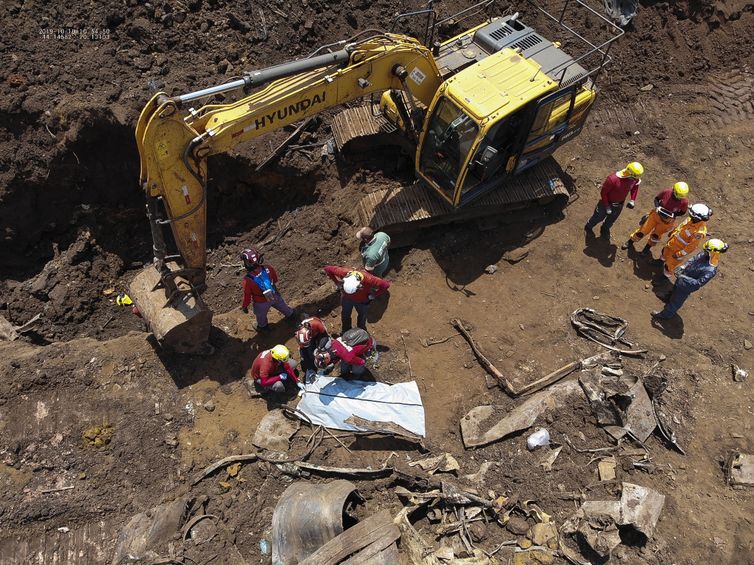
Also interviewed on the program Natureza Viva, Cristina Serra recalls that there are three incidents related to mining companies, and that they “operate with great irresponsibility, without taking into account essential aspects of safety.” She adds that the companies “don’t invest as much in operational safety as they should, because, of course, they always want to increase their profit margin.”
The journalist also points out “another aspect of this story” that contributes to these types of disasters: public oversight bodies – “both state and federal agencies” - do not actually fulfill their role.
“They don’t go on-site to see what’s happening. Both the oversight and licensing processes are bureaucratic, relying heavily on paperwork - documents that companies submit and that oversight bodies simply accept as if the information were correct,” adds Serra.
The other side
Contacted by Agência Brasil, Vale said it does not comment on the lawsuit currently in court, but highlighted the reparation actions underway in the region. The company emphasizes that it is “making progress in repairing the impacts of the Brumadinho dam collapse, with 81 percent of the Judicial Agreement for Full Reparation economically executed by December 2025, and with investments that go beyond compensation.” These actions include socio-environmental recovery, ensuring water supply, and initiatives for economic diversification in the region. Vale also states that, in parallel, it is investing in the safety of its dams.
Samarco, the company responsible for the dam that collapsed in Mariana in 2015, issued a statement reaffirming its solidarity with the affected people, communities, and territories. Following the signing of the New Rio Doce Agreement in 2024, Samarco assumed direct responsibility for carrying out reparation and compensation measures. The company states that it continues to fully comply with the agreement and remains committed to achieving definitive reparation.
According to Samarco, “thousands of people have been compensated, new districts have been built and delivered to communities, and significant environmental recovery actions continue in the states of Minas Gerais and Espírito Santo,” the statement reads.
TÜV SÜD, the German holding company whose Brazilian branch was contracted to assess the dam, says in a statement that the Brumadinho dam collapse “was a great tragedy, and we express our solidarity with the victims and their families.” However, the company adds that it has no legal responsibility for the dam breach.
The company maintains that the issuance of the stability declarations was legitimate, complied with applicable legislation and technical standards, and that the dam was stable at the time the declarations were issued.


