Вид для чтения

Появились новые статьи. Нажмите, чтобы обновить страницу.

SaferNet: Cybercrime reports surge 28% in 2025

Logo Agência Brasil

Reports of cybercrimes rose again across the country last year. The National Center for Reporting Cybercrimes, part of the non-governmental organization SaferNet, received 87,689 new complaints (not repeated or duplicate), marking a 28.4 percent increase over 2024 - 19,403 more complaints than the previous year.

Most reports registered with SaferNet in 2025 were related to images of child abuse and sexual exploitation, totaling 63,214 notifications. This is the second-highest number of complaints of this type in SaferNet's history, surpassed only in 2023, when 71,867 notifications were recorded. The organization believes that the use of artificial intelligence has contributed to the increase in cases.

Notícias relacionadas:

Reports of misogyny, violence, or discrimination against women ranked second, with 8,728 cases, followed by reports of advocacy and incitement to crimes against life, with 4,752 cases, and racism, with 3,220 cases. Complaints of misogyny showed the largest increase during the period, rising from 2,686 to 8,728 cases - an increase of 224.9 percent.

Among the reports received by the hotline, only those related to xenophobia decreased compared to 2024, falling from 3,449 to 755 cases last year. Complaints of human trafficking remained stable at 442 cases. Meanwhile, reports of religious intolerance, LGBTphobia, neo-Nazism, and animal abuse all saw an increase.

Helpline

Another statistic released by SaferNet on Tuesday (Feb. 10) showed that the Helpline, SaferNet’s free support channel, registered a 39 percent increase between 2024 and 2025, with a total of 2,254 calls. The majority of these calls were related to the exposure of intimate images, with 576 cases, followed by mental health issues (332), problems with personal data (228), fraud, scams, or fake e-mails (212), and cases involving images of sexual abuse and exploitation (209).

The data are being presented by SaferNet as part of Safer Internet Day celebrations.

Brazilian Débora Garofalo elected world’s most influential teacher

Logo Agência Brasil

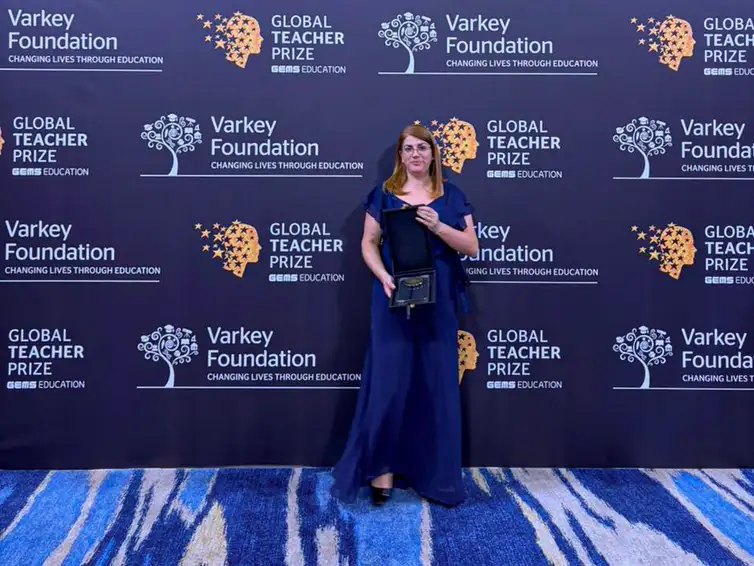
The Varkey Foundation, an international organization dedicated to valuing teachers, recognized Brazilian educator Débora Garofalo as the world’s most influential teacher.

At a ceremony on Monday (Feb. 2) in Dubai, United Arab Emirates, held ahead of the Global Teacher Prize, she received the Global Teacher Influencer of the Year award. The honor recognizes her work beyond the classroom.

Notícias relacionadas:

“I’m still very emotional. Receiving the Global Teacher Influencer award was indescribable. I felt deeply honored, not only as a teacher, but as a representative of Brazilian education,” she told Agência Brasil.

Débora Garofalo was the first person to receive this award, which was launched this year to recognize a teacher who uses her influence and social media to promote education beyond the classroom.

She believes the award demonstrates the strength of Brazilian education and its potential to innovate with limited resources and a strong desire to change realities.

“This recognition shows that work born in the periphery, within public schools, with creativity, humanity, and social commitment, can conquer the world. This award is not just mine. It belongs to my students, to the community where it was born, and to teachers across the country who transform difficulty into learning every day,” Garofalo added.

Rio de Janeiro (RJ), 03/02/2026 – Professora Débora Garofalo ganha prêmio em Dubai.
Foto: Débora Garofalo/Arquivo pessoalRio de Janeiro (RJ), 03/02/2026 – Professora Débora Garofalo ganha prêmio em Dubai.
Foto: Débora Garofalo/Arquivo pessoal
Brazilian educator Débora Garofalo, the world’s most influential teacher. - Débora Garofalo/Personal archive

In 2019, she became the first Brazilian woman and the first South American finalist for the Global Teacher Prize, considered the “Nobel Prize of education.”

Her nomination for the prize resulted from a robotics teaching project using scrap materials for public school students, developed in the outskirts of São Paulo. In the project, young people aged 6 to 14 learn about motor assembly, circuits, and programming to create their own prototypes.

For her, the international recognition of this work sends a clear message to Brazil: it is always necessary to invest in education.

“Brazil has incredible talents within the classroom, and I hope that this recognition can inspire more investment, greater appreciation, and more hope in the transformative power of education,” she noted.

❌