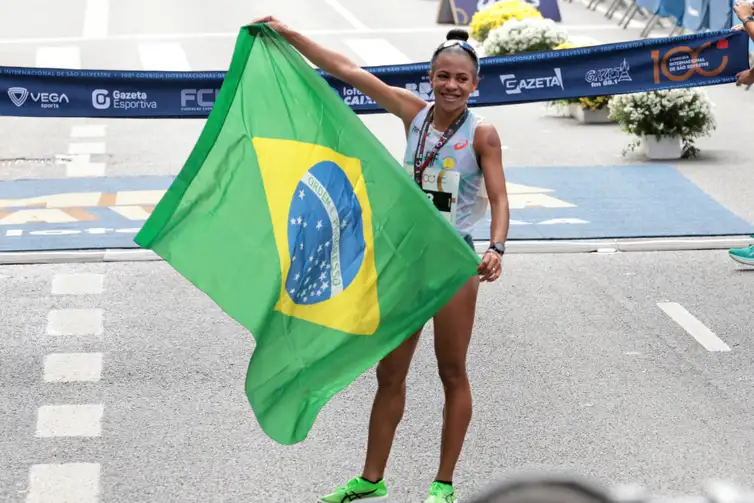
One of Brazil’s most iconic races reaches its 100th edition this year: the São Silvestre. Created in 1925 by businessman and journalist Cásper Líbero, the competition has spanned a century and established itself as one of the most prestigious sporting events in Brazil and Latin America.

The run has crowned memorable athletes and become a symbol of celebration and community on the streets of São Paulo, attracting thousands of professional and amateur runners with each edition.
Inspired by street races that Cásper Líbero witnessed in Paris, the first edition featured 48 runners. Journalist and executive director of the São Silvestre race, Erick Castelhero, explains that the contest already had one of its most famous characteristics from the very beginning.
“The idea was always to connect the last night of the year with New Year’s Eve and already usher in the new year. Perhaps Cásper did not imagine that [the race] would become what it is today.”
In the early editions, only Brazilian athletes competed. The first winner was Alfredo Gomes. The grandson of enslaved people, he was also the first black Brazilian athlete to take part in the Olympic Games. In 1945, foreign runners began participating in the competition.
Following this change, Brazil went decades without winning the run. The drought ended in 1980 with the historic victory of José João da Silva. A São Paulo Futebol Clube athlete, he recalls the impact of that title, taking the lead in the final meters.
“To tell the truth, I had no idea of the magnitude of the victory. It stopped the country - it was like a World Cup. That victory was a major milestone.”
Five years later, the athlete won the race again, becoming one of the few Brazilians to achieve this feat.
The most successful runner in the São Silvestre is Portuguese athlete Rosa Mota, who achieved six consecutive victories in the early 1980s - Paulo Pinto/Agência Brasil
The growth of the São Silvestre race and its competitive level attracted athletes from around the world. Mexican runner María del Carmen Díaz, a three-time São Silvestre champion (1989, 1990, and 1992), trained in a volcanic region near her hometown of Toluca. In São Paulo, she overcame the 30-degree heat to win the first São Silvestre held in the afternoon. She fondly recalls the support of the crowds along the streets:
“I truly admire the Brazilian public because, as I’ve always said, I’ve been more recognized in another country than in Mexico itself. I feel proud because there are runners - men and children alike - who tell me that, because of me, they practice sports and enjoy running.”
It was only from the 51st edition onward that the São Silvestre competition began to include a women’s event. The most successful runner in the São Silvestre is Portuguese athlete Rosa Mota, who achieved six consecutive victories in the early 1980s. The second-highest number of wins was in the men’s event: Kenyan Paul Tergat claimed five victories. Among Brazilian runners, Marílson Gomes dos Santos won three times.
Popular phenomenon
Over the course of a century, the São Silvestre has also become a popular phenomenon. Thousands of amateur athletes from across the country gather on Paulista Avenue to celebrate the New Year, pushing their own limits and sharing a passion for running.
To mark its centenary, this year’s São Silvestre run will be the largest edition in history. Around 55,000 participants are expected, with races for women, men, and people with disabilities, as well as the São Silvestrinha - an event that brings together 2,000 children and teenagers from across the country, forming a new generation passionate about running.

 Войти
Войти