
Вид для чтения

Появились новые статьи. Нажмите, чтобы обновить страницу.

Brazil’s population growth slows as aging accelerates

Logo Agência Brasil

Brazil’s population is aging and growing at an increasingly slower rate. This is reflected in the 2025 Continuous National Household Sample Survey (PNAD), released this Friday (Apr. 17) by the Brazilian government’s statistics agency IBGE.

Last year, the country's resident population reached 212.7 million, an increase of 0.39 percent compared to 2024. The growth rate has remained below 0.60 percent since 2021. Of the total, 51.2 percent were women and 48.8 percent were men.

Notícias relacionadas:

The distribution of the population shows a decline in the proportion of people under 40 years of age, a group that was 6.1 percent smaller in 2025 than in 2012. By contrast, the share of older age groups has increased: those aged 40 to 49 rose from 13 percent to 15 percent, those aged 50 to 59 from 10 percent to 11.8 percent, and those aged 60 or older from 11.3 percent to 16.6 percent.

This shift is also evident in the age pyramid: between 2012 and 2025, the base narrowed and the top widened, with a decline in the population aged 39 and under.

Regional differences remain striking. The North and Northeast regions have the highest shares of young people, accounting for 22.6 percent and 19.1 percent of the population aged 13 and under, respectively, while the Southeast and South have higher proportions of older adults, with both regions reporting 18.1 percent of the population aged 60 or older.

There have also been changes in how the population identifies its skin color or race. The number of people identifying as white has declined in all regions of the country. In 2012, whites accounted for 46.4 percent of the population; by 2025, this share had fallen to 42.6 percent. The percentage of people identifying as black rose from 7.4 percent to 10.4 percent.

The North recorded the largest increase in the black population, rising from 8.7 percent to 12.9 percent. The South saw the strongest growth among people of mixed race, from 16.7 percent to 22 percent, and the sharpest decline in the share of those identifying as white, from 78.8 percent to 72.3 percent.

Rise in single-person households

The percentage of people living alone also increased. In 2025, single-person households accounted for 19.7 percent, up from 12.2 percent in 2012. The nuclear family arrangement - defined as a couple, a mother with children, or a father with children - remains the most common, representing 65.6 percent of households. However, this share has declined from 68.4 percent in 2012.

The survey shows age and gender differences among people living alone. Among men, 56.6 percent are between 30 and 59 years old, while among women, the largest share (56.5 percent) is aged 60 or older.

Regarding housing tenure, the proportion of rented properties rose to 23.8 percent, an increase of 5.4 percentage points since 2016. Meanwhile, the share of fully paid-off, owner-occupied homes fell to 60.2 percent, a decline of 6.6 percentage points over the same period.

There was also a shift in housing types: single-family homes still predominate, but their share fell to 82.7 percent, while apartments increased to 17.1 percent.

Lula to attend Brazil-Spain Summit in Barcelona

Logo Agência Brasil

This Friday (Apr. 17), President Luiz Inácio Lula da Silva will participate in the 1st Brazil–Spain Summit, where he will be welcomed by Spanish President Pedro Sánchez. The Brazilian government expects that, during the summit, the two countries will expand their common ground on issues such as multilateralism, international law, and the peaceful resolution of conflicts.

Agreements and treaties in areas such as gender equality, the social solidarity economy, health, culture, entrepreneurship, air services, telecommunications, science, and technology are expected to be signed.

Notícias relacionadas:

The president arrived on Thursday (Apr. 16) in the Spanish city of Barcelona, the first stop on his trip to three European countries - Spain, Germany, and Portugal. He is accompanied by a delegation of 15 ministers.

“The goal is to consolidate partnerships, attract investment, and discuss urgent global issues such as defending democracy, multilateralism, and the fight against inequality,” Lula posted on social media.

The trip also seeks to build support for Michelle Bachelet’s candidacy for United Nations (UN) Secretary-General and comes at a critical moment in relations with the European Union, ahead of the provisional entry into force of the Mercosur–European Union agreement, scheduled for May 1.

On Saturday (18), the fourth high-level meeting of the Forum for the Defense of Democracy, launched in 2024, will take place. The meeting will focus on issues related to multilateralism, including the process of selecting the next UN Secretary-General, as well as inequalities, with Brazil advocating the inclusion in the final declaration of provisions on political and digital gender-based violence, and the fight against disinformation.

17.04.2026 – Presidente da República, Luiz Inácio Lula da Silva, durante cerimônia oficial de chegada. Jardins do Palácio de Pedralbes, Espanha.

Foto: Ricardo Stuckert / PR17.04.2026 – Presidente da República, Luiz Inácio Lula da Silva, durante cerimônia oficial de chegada. Jardins do Palácio de Pedralbes, Espanha.

Foto: Ricardo Stuckert / PR
The president arrived on Thursday (Apr. 16) in the Spanish city of Barcelona, the first stop on his trip to three European countries - Spain, Germany, and Portugal. He is accompanied by a delegation of 15 ministers - Ricardo Stuckert / PR

On Sunday (19), Lula will depart for Germany, where he will participate in Hannover Messe - the world’s largest trade fair for industrial innovation and technology - which is honoring Brazil this year.

While in Germany, he will also hold a meeting with Chancellor Friedrich Merz. Brazilian diplomats expect 10 agreements to be signed between the two countries, covering areas such as defense, climate change, infrastructure, artificial intelligence, energy innovation, the bioeconomy, sustainable development, app development, and research on the oceans and the Brazilian Cerrado biome.

On Monday (Apr. 20), the delegation’s schedule includes the opening of the Brazilian booth at the Hannover Messe trade fair and a guided tour of the pavilions. In Germany, Lula will also take part in a business forum.

The trip will conclude on Tuesday (21) with a brief state visit to Portugal. In Lisbon, Lula will meet with Prime Minister Luís Montenegro and President António José Seguro. The meetings will address items on the bilateral agenda, such as cooperation in aviation, science, technology and innovation, as well as issues related to immigration, the fight against xenophobia, the Brazilian community in Portugal, peace, and international security.

WSL: Six Brazilian surfers reach round of 16 at Margaret River event

Logo Agência Brasil

Brazilian surfing has six representatives in the round of 16 at the Australian Margaret River event, the second stop on the World Surf League (WSL) tour. In the opening round on Thursday (Apr. 16), Gabriel Medina, Yago Dora, Ítalo Ferreira, João Chianca, and brothers Miguel and Samuel Pupo advanced.

Three other Brazilians made an early exit from Margaret River: Matheus Herdy, Filipe Toledo, and Alejo Muniz. In total, the WSL features 36 surfers in the men’s competition and 24 in the women’s.

Notícias relacionadas:

The first to qualify, Samuel Pupo scored 15.50 (the sum of his two highest waves) against American Cole Houshmand (11.60). In the round of 16, he will face American Kanoa Igarashi.

In the seventh heat, three-time world champion Gabriel Medina dominated Mexico’s Alan Cleland. After finishing third at the Bells Beach event last week, Medina scored 13.16 to Cleland’s 8.50. His next opponent will be host Jack Robinson, a two-time winner of the event in 2024.

Brazilian Yago Dora, the current world champion, came out on top in his debut against Australian Jacob Willcox, scoring 13.67 to 12.93 in heat 9. Dora will face Australian-Japanese surfer Connor O’Leary in the round of 16.

In heat 11, two-time world champion Ítalo Ferreira (13.47) had a thrilling battle against Morocco’s Ramzi Boukhiam (13.33) and emerged victorious. The margin was just 0.14 points. The round of 16 will be an all-Brazilian matchup: Ítalo will face João Chianca, who advanced in the next heat by defeating American Jake Marshall 12.70 to 12.00.

The last Brazilian in action at Margaret River, Miguel Pupo, the ranking leader after his title at Bells Beach, easily defeated Australian Morgan Cibilic with a score of 12.83 to 6.90. In the round of 16, he will face another local surfer: Ethan Ewing.

Brazil also has Luana Silva competing in the women’s division. She will make her debut directly in round 2 against local favorite Sophie McCulloch.

Brazilian government proposes BRL 73B primary surplus for 2027

Logo Agência Brasil

The Brazilian government’s economic team has proposed a primary surplus target of BRL 73.2 billion for 2027, the first year of the next presidential term. The figure corresponds to 0.5 percent of Gross Domestic Product (GDP) and was presented in the Budget Guidelines Bill (PLDO) sent to Congress on Wednesday (Apr. 15).

If confirmed, it would mark the first positive result in federal accounts since 2022, considering all public spending.

Notícias relacionadas:

The primary surplus represents the government’s budget balance excluding interest on public debt. For this year, the government forecasts a small surplus of BRL 3.5 billion under official criteria. However, when spending outside the fiscal framework is included, the forecast shifts to a deficit of BRL 59.8 billion.

The proposal will need congressional approval and will apply to the next president-elect, who may maintain or alter the rules with lawmakers’ consent.

Spending limits

Under the fiscal framework rule, which limits real spending growth (above inflation) to 70 percent of real revenue growth, federal spending could rise by up to 3.3 percent in 2027.

In absolute terms, the Brazilian government could spend up to BRL 2.541 trillion in 2027. Of that total, the Executive Branch could spend up to BRL 2.441 trillion.

Next steps

The PLDO sets broad budget guidelines, while details on revenue and expenditure will be presented by August 31 with the submission of the Annual Budget Bill (PLOA).

The proposal underscores the challenge facing the next administration in balancing public accounts amid persistent fiscal pressures and moderate economic growth.

Brazil budget bill projects 2.56% GDP growth in 2027

Logo Agência Brasil

According to estimates in the 2027 Budget Guidelines Bill (PLDO), submitted to Congress on Wednesday (Apr. 15), Brazil’s economy (GDP) is expected to grow 2.56 percent next year.

The bill also forecasts a drop in official inflation, as measured by the Broad National Consumer Price Index (IPCA), to 3.04 percent in 2027, compared to the 3.74 percent estimated for this year.

Notícias relacionadas:

Regarding the IPCA, the projection for next year falls within the continuous 3 percent target set by the National Monetary Council (CMN), with a tolerance margin of 1.5 percentage points. Within this range, inflation could vary between 1.5 percent and 4.5 percent next year without breaching the target.

The bill also projects the Selic, the economy’s benchmark interest rate, at 10.55 percent per year in 2027, compared with the current 14.75 percent.

The text sent to Congress projects an average exchange rate of BRL 5.47 for 2027. Although oil is currently trading at around USD 100 per barrel, the bill estimates the commodity’s average price - used to project federal government royalty revenue - at USD 67.69 next year.

Brazilian ex-congressman Ramagem released after 2 days in US custody

Logo Agência Brasil

Former federal congressman Alexandre Ramagem was released on Wednesday (Apr. 15) after spending two days in custody in the United States, where he is wanted by Brazilian authorities.

On Monday (13), Ramagem was approached by agents from US Immigration and Customs Enforcement (ICE) and detained in Orlando, Florida.

Notícias relacionadas:

The former lawmaker is no longer listed in the region’s detention records.

The reasons for Ramagem’s release were not disclosed by US authorities.

Ramagem is the subject of an extradition request filed by the Brazilian government with US officials.

Escape

In September last year, Alexandre Ramagem, former director of the Brazilian Intelligence Agency (ABIN), fled the country to avoid serving a 16-year prison sentence for his role in the coup plot during the administration of former President Jair Bolsonaro.

Brazil raises 5 billion euros in record international bond issuance

Logo Agência Brasil

The Brazilian government raised 5 billion euros on Wednesday (Apr. 15) in a bond issuance on the European market, marking the country’s return to the segment after more than ten years. The transaction was led by the National Treasury and was announced by Finance Minister Dario Durigan.

According to the minister, the issuance was divided into three maturities: four-, seven- and ten-year terms. The minister provided details of the operation during an official visit to Washington, D.C., in the United States, where he is taking part in meetings of the International Monetary Fund (IMF) and the World Bank.

Higher-than-expected demand

Notícias relacionadas:

According to the minister, demand for the bonds exceeded government expectations, indicating strong interest from international investors.

“We achieved historic fundraising,” said Durigan. “We have successfully returned to the European market and plan to explore new markets by the end of the year.”

According to estimates presented by international financial institutions, the issuance was structured into three tranches: 2 billion euros in bonds maturing in 2030, 1.5 billion euros maturing in 2033, and 1.5 billion euros maturing in 2036.

The National Treasury will subsequently provide details such as interest rates and spreads. The Brazilian government’s last euro-denominated bond issuance was in 2014.

Debt strategy

The transaction is part of Brazil’s strategy to manage public debt and expand its presence in different markets and currencies.

According to the Treasury, the issuance also aims to establish a benchmark for euro-denominated bonds, which could facilitate future fundraising by Brazilian companies abroad.

The proceeds will be used primarily to refinance federal public debt, replacing existing obligations.

Brazilian voters over 60 up 74%, survey reveals

Logo Agência Brasil

A survey conducted by Nexus-Pesquisa e Inteligência de Dados using data from the Superior Electoral Court’s Open Data Portal reveals that the so-called Silver Generation - voters aged 60 and older - has grown five times faster than the overall electorate over the past 16 years.

While the number of voters across all age groups grew by 15 percent between 2010 and 2026, the 60+ electorate increased by 74 percent over the same period, rising from 20.8 million in 2010 to 36.2 million in March this year.

Notícias relacionadas:

According to Nexus, these figures may increase even further by May 6, the deadline for voter registration with the Superior Electoral Court.

As of the date of the survey, 156.2 million people were eligible to participate in the electoral process this October, compared with 135.8 million in 2010. The survey suggests that, in a scenario of acute polarization such as that seen in the 2022 election, securing the support of the 60+ population is strategic.

According to Nexus CEO Marcelo Tokarski, the Silver Generation could help determine the outcome of this year’s election.

“It is entirely plausible that the so-called Silver Generation (60+) could be decisive in the election, although this group alone cannot be said to determine the outcome,” he stated.

Significant influence

Tokarski noted that in the 2022 presidential election, the margin between the candidates was narrow - less than 2 million votes - making this demographic highly strategic. Numerically, the 60+ generation now carries significant weight, accounting for one in four voters in Brazil and therefore capable of influencing close races.

“Thus, although it does not determine the outcome on its own, it can tip the scales, especially in polarized scenarios,” said the CEO of Nexus.

He acknowledged that the share of older voters in elections is likely to continue growing in step with rising life expectancy. “The trend clearly shows that the proportion of senior voters is keeping pace with - and directly reflects - increasing longevity and population aging.”

The survey shows that the population aged 60 and over rose from 7 percent to 16 percent over three decades, while, in parallel, the 60+ electorate expanded rapidly and now accounts for 23.2 percent of voters.

Abstention

Abstention among voters aged 60 and older has declined over the last three elections: it stood at 37.1 percent in 2014, dropped to 36.4 percent in 2018, and fell to 34.5 percent in 2022. In contrast, abstention rates among the Brazilian electorate as a whole rose from 19.4 percent in 2014 to 20.3 percent in 2018 and 20.9 percent in the most recent national election.

Although voters aged over 70 have a higher abstention rate than the average for the 60+ population, they have also been turning out to vote in greater numbers. With no mandatory voting requirement, this group recorded abstention rates of 63.6 percent in 2014, 62.7 percent in 2018, and 58.9 percent in 2022.

According to Marcelo Tokarski, Brazilians over 70 who participate in elections do so out of political conviction or identification and, alongside younger voters aged 16 to 18, constitute the segments of the Brazilian electorate that candidates must “win over.” He believes that, in a highly competitive political landscape, these groups have the potential to sway election outcomes.

Political landscape

The number of candidates over 60 has also been increasing annually in Brazil, in both general and municipal elections. According to data from the Superior Electoral Court, in the 2024 elections, more than 70,000 Brazilians aged 60 and older ran for office, accounting for 15 percent of all candidates.

This figure is the highest since the beginning of the time series in 1998. The previous election, in 2022, also set a record for general elections: there were 4,873 candidates aged 60 or older, accounting for 17 percent of all candidacies.

Brazil plan targets 10% of GDP for education

Logo Agência Brasil

One of the goals of Brazil’s National Education Plan (PNE) is to increase public investment in education to 7.5 percent of Gross Domestic Product (GDP) within seven years and to 10 percent within a decade. President Luiz Inácio Lula da Silva signed the document on Tuesday (Apr. 14) during a ceremony at the Planalto presidential palace in Brasília.

In total, the new plan includes 19 objectives, 73 goals, and 372 strategies, introducing new commitments to learning, inclusion, and equity.

Notícias relacionadas:

For President Lula, the plan - which he called a “masterpiece” - reaffirms the commitment to education for the next ten years. He noted that Brazilian society must take responsibility for the results and that there must be oversight to ensure the goals are met.

At the ceremony, Education Minister Leonardo Barchini emphasized that this is the best national education plan ever presented, with a strong focus on equity and educational quality.

“For the first time, we have set several distinct objectives and specific goals related to quality, including inclusive education, education for indigenous peoples, quilombola communities, rural areas, and sign language,” he said.

Goals from literacy to high school education

Priorities include topics such as literacy, learning, educational pathways, infrastructure, connectivity, digital education, and the training of education professionals.

Among the expected outcomes, according to the Brazilian government, is ensuring that at least 80 percent of children are literate by the end of the 2nd grade of elementary school. The plan aims to achieve this goal within five years.

Another goal set out in the document is to achieve universal literacy at the appropriate age within a decade.

The plan covers education from early childhood through graduate school, with an emphasis on initiatives such as literacy, teacher professional development, connectivity, and socio-environmental sustainability.

Other PNE goals include:

  • 65 percent of schools and 50 percent of students in full-time education by 2036;
  • 60 percent of children up to age 3 enrolled in early childhood education by 2036;
  • 100 percent of students literate by 2036;
  • Minimum operational and health standards in all public elementary and middle schools by the third year of the plan’s implementation;
  • Vocational and technical education available to at least 50 percent of high school students by 2036.

In practice

The Brazilian government explained that the bill underlying the new plan was drafted by the Ministry of Education with the intention of being more than just a legal document. The plan’s proposed goals stem from programs and policies designed and currently being implemented by the ministry, such as the National Commitment to Literate Children (CNCA).

The drafting of the document also took into account proposals and extensive discussions held across the country, culminating in the document produced by the National Education Conference (CONAE) in January 2024.

CONAE was preceded by municipal, intermunicipal, and state-level conferences.

Lula criticizes Trump’s threats to the world and defends Pope Leo XIV

Logo Agência Brasil

Brazilian President Luiz Inácio Lula da Silva stated Tuesday (Apr. 14) that the US war against Iran led by Donald Trump is reckless and that the US president does not need to threaten the world. He also expressed solidarity with Pope Leo XIV, who exchanged critical remarks with Trump this week.

In Lula’s view, Trump uses rhetoric to try to please the public and convey the idea that the US is an “omnipotent country, of a superior people.” He stated that he admires the US as the world’s largest economy, but this is the result of the hard work of its people.

Notícias relacionadas:

“This isn’t because of the president’s authoritarianism. It’s because of the economic situation, the country’s importance, and the level of higher education they have. So Trump didn’t need to go around threatening the world,” President Lula said.

“Trump’s threats are not good for democracy. This war with Iran is reckless,” he added, highlighting the conflict’s consequences for the economy, particularly fuel prices.

On Sunday (12), while commenting on the pope’s criticism of US actions in Iran and Venezuela, Trump stated that Leo XIV is “terrible at foreign policy” and asked him to stop pandering to the radical left. The pope responded that he is not afraid of the US president and that he believes in the Gospel’s message of peace.

“I met with him [Pope Leo XIV] and was very impressed. [I wish] to stand in solidarity with him, because his criticism of President Trump is correct. No one needs to be afraid of anyone,” Lula said in an interview with journalists.

Alexandre Ramagem

Lula also mentioned the recent partnership between Brazil and the US aimed at combating international arms and drug trafficking, and commented on the arrest of former federal representative Alexandre Ramagem by the US Immigration and Customs Enforcement (ICE).

“I think Ramagem is going to come here. The right wing here in Brazil is saying he was arrested for a minor [traffic] fine, but that’s not true. He was arrested. He had already been sentenced to 16 years in this country [Brazil]. He was a coup plotter who’s been convicted. He has to return to Brazil to serve his sentence,” Lula declared.

Brazilian bishops express support for Pope Leo XIV

Logo Agência Brasil

The National Conference of Bishops of Brazil (CNBB) published an official statement on Monday (Apr. 13) in support of Pope Leo XIV, after he received criticism from US President Donald Trump.

The document serves as an institutional response in support of the pontiff’s stance on the escalation of armed conflicts in the Middle East. On Saturday (11), during a special prayer vigil at St. Peter’s Basilica, the pope called on world leaders to refrain from any “show of force” and to “sit down at the table of dialogue and mediation.”

Notícias relacionadas:

The CNBB noted in a statement that Pope Leo XIV’s authority is guided by “fidelity to the Gospel.” The Brazilian conference further maintains that Leo XIV continually works to defend human dignity and promote dialogue for conflict resolution. 

“The Pope’s spiritual and moral authority is not guided by the logic of political confrontation, but by fidelity to the Gospel, which continually raises its voice in defense of peace, human dignity, and dialogue among peoples,” the text reads.

The statement is signed by the leaders of the organization – CNBB President Cardinal Jaime Spengler; first and second vice presidents, Bishop João Justino de Medeiros and Bishop Paulo Jackson; and Secretary-General Bishop Ricardo Hoepers.

Trump

On Sunday (12), in a statement to the press, Trump described Pope Leo XIV as “weak on crime and terrible at foreign policy,” as well as “a very liberal person.” Leo XIV is the first US pope and assumed leadership of the Catholic Church in May 2025. 

The President of the US stated that he does not like the Pope’s stance on nuclear weapons.

“We don’t want a pope that says crime is OK in our cities. I don’t like it. I’m not a big fan of Pope Leo,” the president said.

The US president also posted a photo montage generated by artificial intelligence that depicts him as a divine figure healing a sick man. The post was made on Sunday (12) and deleted on Monday (13). 

On Monday morning, Pope Leo declared he was not afraid of the Trump administration or of proclaiming the Gospel message aloud. The statement came in response to questions from journalists who were with him aboard the papal plane during the first leg of his apostolic journey to the African continent.

Campaign to administer 89,000 vaccine doses in indigenous territories

Logo Agência Brasil

Brazil’s Ministry of Health expects to administer more than 89,000 vaccine doses across 650 indigenous villages from April 25 to May 25, 2026. During this period, the 2026 Indigenous Peoples’ Vaccination Month (MVPI) will take place, with the goal of expanding access to immunization in indigenous territories, especially in hard-to-reach areas. Last year, over 70,000 doses were administered, reaching 57,000 indigenous people.

The 2026 campaign was announced Monday (Apr. 13) by the Secretary of Indigenous Health, Lucinha Tremembé, in Barão do Rio Branco village, located in Mâncio Lima, Acre state. Three ethnic groups - Puyanawa, Nukini, and Nawa - live in the municipality, totaling about 2,000 indigenous people.

Notícias relacionadas:

According to the secretary, launching the campaign in a territory with longstanding access challenges is a strategic and necessary decision.
Mâncio Lima (AC), 13/04/2026 - O Ministério da Saúde, por meio da Secretaria de Saúde Indígena (SESAI), anunciou o Mês de Vacinação dos Povos Indígenas (MVPI) para 2026. A iniciativa foi anunciada pela secretária Lucinha Tremembé nesta manhã, na aldeia Barão do Rio Branco. A campanha busca ampliar o acesso à imunização em territórios indígenas, especialmente em áreas de difícil acesso. O MVPI contará com mais de 2,5 mil trabalhadores mobilizados para ampliar a imunização nos 34 DSEI do país. Foto: Fábio Maciel/MSMâncio Lima (AC), 13/04/2026 - O Ministério da Saúde, por meio da Secretaria de Saúde Indígena (SESAI), anunciou o Mês de Vacinação dos Povos Indígenas (MVPI) para 2026. A iniciativa foi anunciada pela secretária Lucinha Tremembé nesta manhã, na aldeia Barão do Rio Branco. A campanha busca ampliar o acesso à imunização em territórios indígenas, especialmente em áreas de difícil acesso. O MVPI contará com mais de 2,5 mil trabalhadores mobilizados para ampliar a imunização nos 34 DSEI do país. Foto: Fábio Maciel/MS
The 2026 campaign was announced Monday (Apr. 13) by the Secretary of Indigenous Health, Lucinha Tremembé, in Barão do Rio Branco village, located in Mâncio Lima, Acre state - Fábio Maciel/MS

“Our goal is to expand vaccination in areas with low coverage, ensuring that information is communicated clearly and respectfully and that the population understands the importance of immunization for individual and collective protection,” said Tremembé.

During Vaccination Month, all 19 vaccines included in the National Immunization Schedule, including the COVID-19 vaccine, will be offered.

The initiative has been held since 2010 and is part of the 24th Vaccination Week in the Americas and the 15th World Immunization Week, which begin on April 25 and run through May 2.

Coordinated by the Secretariat of Indigenous Health (SESAI), the campaign strengthens protection against vaccine-preventable diseases and helps reinforce primary care through the active search for indigenous people who have not yet been vaccinated.

Brazilian fugitive Alexandre Ramagem arrested in US

Logo Agência Brasil

The Brazilian Federal Police stated in a press release that Alexandre Ramagem’s arrest by US Immigration and Customs Enforcement (ICE) resulted from “international police cooperation between Brazil’s Federal Police and US law enforcement authorities.”

According to the Federal Police, Ramagem was detained in Orlando.

Notícias relacionadas:

“The detainee is considered a fugitive from Brazilian justice following his conviction for the crimes of participation in an armed criminal organization, attempted coup d’état, and attempted violent abolition of the rule of law,” the statement read.

The US Department of Homeland Security’s website lists Ramagem as “in ICE custody.”

Conviction

In September last year, Alexandre Ramagem fled Brazil after the Supreme Court sentenced him to 16 years, 1 month, and 15 days in prison for attempted coup d’état, participation in a criminal organization, and attempted violent abolition of the democratic rule of law.

Despite being barred from leaving the country, the former congressman crossed the border into Guyana and traveled to the United States using a diplomatic passport that had not been confiscated.

Ramagem’s name appears on Interpol’s list of wanted fugitives. Through its embassy in Washington, the Brazilian government has requested Alexandre Ramagem’s extradition from the United States. The petition was submitted to the State Department in late December 2025.

Ramagem served as director-general of the Brazilian Intelligence Agency (ABIN) during the administration of Jair Bolsonaro (2019–2022) and lost his seat in Congress in December 2025 following a House Steering Committee decision after his conviction by Brazil’s Supreme Court.

Alexandre Ramagem was a career Federal Police officer who was dismissed following his conviction.

*TV Brasil and Rádio Nacional contributed to this report.

Petrobras discovers oil in pre-salt layer off the coast of Rio

Logo Agência Brasil

Petrobras has detected the presence of hydrocarbons in the pre-salt layer of the Campos Basin. According to the state-run oil giant, the well, drilled 2,984 meters deep into the water, is located 201 km off the coast of Rio de Janeiro state.

“The hydrocarbon-bearing interval was confirmed through electrical logs, gas indications, and fluid sampling,” the company stated.

Notícias relacionadas:

The samples will be sent for laboratory analysis. The assessments, Petrobras reported, will make it possible to determine the characteristics of the reservoirs and fluids and to decide whether to continue studying the area’s potential.

“The well was drilled safely, with respect for the environment and the people,” the company added.

The company’s operations in block C-M-477, in the Campos Basin, “are aligned with the strategy to replenish oil and gas reserves by operating in frontier exploration areas in partnership with other companies, ensuring that the national energy demand is met during the energy transition.”

With a 70 percent stake, Petrobras operates the block in partnership with British Petroleum, which holds the remaining portion.

Malaria deaths in Yanomami territory fall 80% in 2025, government says

Logo Agência Brasil

The Ministry of Health this week released a new report on the situation of indigenous peoples in the Yanomami territory in Roraima, the country’s largest indigenous territory. It recorded an 80.8 percent reduction in malaria-related deaths between January 2023 and the end of 2025, after the Brazilian government declared a Public Health Emergency of National Importance (ESPIN) to address the humanitarian crisis caused by the invasion of illegal gold miners.

The report cites a 75.9 percent increase in the number of tests conducted through active case finding. Testing for the disease also rose from 144,986 to 257,930 in 2025.

Notícias relacionadas:

Deaths from malnutrition fell by a significant 53.2 percent between 2023 and 2025. During the same period, the share of children under five with adequate weight increased from 45.4 percent to 53.8 percent, according to the report.

There was an increase in the number of children receiving regular follow-up care from health teams, rising from 70.1 percent to 85.1 percent. Severe malnutrition also declined, with the share of children who were severely underweight falling from 24.2 percent to 15.2 percent during the period.

The number of consultations for acute respiratory infections increased by 254 percent between 2023 and 2025. As a result, the disease’s case fatality rate fell by 76 percent, while the number of deaths declined by 16.7 percent since the start of the Public Health Emergency response.

Mães com bebês indígenas Yanomami nos arredores da Casa de Saúde do Índio, que presta acolhimento aos indígenas trazidos em situação de emergência para Boa VistaMães com bebês indígenas Yanomami nos arredores da Casa de Saúde do Índio, que presta acolhimento aos indígenas trazidos em situação de emergência para Boa Vista
Severe malnutrition also declined, with the share of children who were severely underweight falling from 24.2 percent to 15.2 percent - Fernando Frazão/Agência Brasil

Vaccines

In the area of immunization, the Ministry of Health confirmed a 40 percent increase in the number of doses administered in 2025 compared with 2023, rising from 31,999 to 44,754. The percentage of children under one year of age with a complete vaccination schedule more than doubled during the period, rising from 27 percent in 2023 to 60.6 percent in 2025. Among children under five, the rate grew from 47.4 percent to 78.3 percent, reflecting stronger routine vaccination efforts.

According to the Ministry’s Secretary of Indigenous Health, Lucinha Tremembé, the results reflect expanded access to healthcare in the territory, reaffirming the government’s commitment to protecting lives and promoting the health of indigenous peoples.

“We are making steady progress in improving health in the Yanomami territory, with a reduction in deaths and, above all, in deaths from preventable causes such as malnutrition and malaria. These results reflect the current administration’s ongoing effort to strengthen the Brazilian government’s presence, ensuring comprehensive, high-quality care that respects the cultural specificities of indigenous peoples,” she noted.

Atendimento aos indígenas Yanomami trazidos ao Hospital de Campanha da Força Aérea Brasileira, instalado na na Casa de Saúde do Índio, em Boa Vista.Atendimento aos indígenas Yanomami trazidos ao Hospital de Campanha da Força Aérea Brasileira, instalado na na Casa de Saúde do Índio, em Boa Vista.
The number of professionals has more than tripled, rising from 690 to over 2,130 workers deployed directly in villages - Fernando Frazão/Agência Brasil

Health services

Among the advances highlighted by the Brazilian government is the expansion of the healthcare workforce in the territory. Since the start of the health emergency, the number of professionals has more than tripled, rising from 690 to over 2,130 workers deployed directly in villages, at the Indigenous Health Center (CASAI) in Boa Vista, and within the facilities of the Yanomami Special Indigenous Health District.

In the area of infrastructure, the Yanomami Center for Emergency Public Health Operations highlighted the completion of 261 interventions in water supply systems, along with the installation of more than 1,400 filters, helping expand access to safe water.

The government also installed 61 solar energy systems and upgraded health facilities, strengthening the foundation for primary care in the territory.

Another important milestone during the national emergency period was the renovation and expansion of the Indigenous Health Reference Center (CRSI) at the Surucucu base camp, deep inside the territory.

Since its restructuring, the facility - which serves as a reference point within the indigenous territory - has provided 4,374 outpatient consultations. Of these, 2,081 were laboratory tests and 328 were ultrasound exams. The facility serves 48 communities and handles most patient transfers to higher-capacity healthcare facilities in the region.

“This specialized infrastructure has helped improve clinical management, strengthen community ties, and streamline care pathways,” the Ministry of Health said in the statement.
Study on autism in Brazil highlights limited access to diagnosis

Logo Agência Brasil

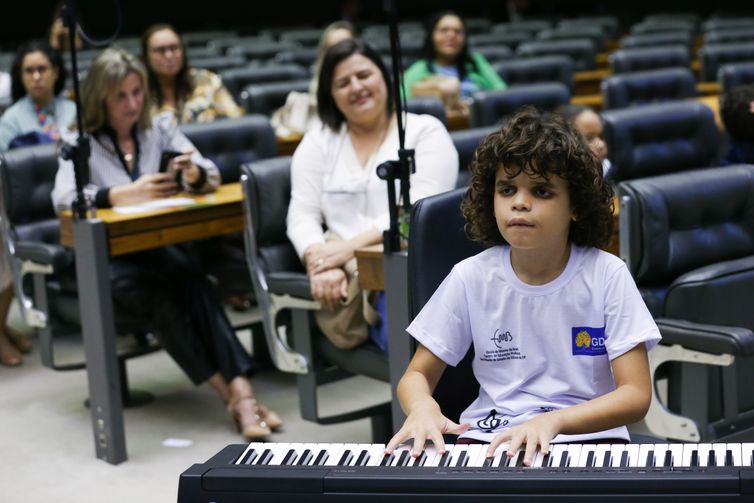
A study entitled Mapa Autismo Brasil (MAB) – “Brazil’s Autism Map” – the first national sociodemographic profile of people with autism, released this week, reveals that access to diagnosis and therapies in Brazil remains limited.

Published by Institute Autismos, the study surveyed people with autism and their caregivers across all Brazilian states with the aim of identifying the profile of Brazilians with autism and the services to which they have access.

Notícias relacionadas:

The data show that, even though about a quarter of the Brazilian population has access to health insurance, only 20.4 percent of those surveyed reported having received a confirmed diagnosis of autism spectrum disorder (ASD) through the national health care network, the SUS.

The study also indicates that only 15.5 percent of respondents said they receive therapy through the public health system, while more than 60 percent reported using health insurance plans or paying privately to access the service.

In a statement, the institute says that the issue is even more widespread.

“The results of Brazil’s Autism Map also reveal that 56.5 percent of respondents (including those using the SUS and the private sector) reported that the autistic person in question (the respondent themselves or the person under their care) receives up to two hours of therapy per week, which falls short of international recommendations – which call for multidisciplinary therapies and a high weekly workload.”

Analysis

In May 2025, Brazil’s statistics bureau IBGE for the first time released data from the 2022 census which identified 2.4 million people with ASD in Brazil – 1.2 percent of the Brazilian population.

“Unlike the census, Brazil’s Autism Map conducts a socioeconomic analysis and gauges access to services for people with autism and their caregivers, contributing to an evaluation of the current landscape and highlighting the need for improvements in public policies,” the institute noted.

Diagnosis

Brazil’s Autism Map reveals difficulties in accessing ASD diagnosis through the SUS as well as delays in diagnosis in general, which hinders early interventions.

The results indicate a concentration of diagnoses in the age group up to four years (51.7%), followed by 5–9-year-olds (17.1%) and 10–14-year-olds (6.1%).

“The difference between the median (four years) and the mean (11 years) reveals that, although most diagnoses occur early, there is still a significant number of diagnoses made at older ages, which raise the sample’s mean,” the institute warned.

The study also found that the first signs of ASD are most often noticed by close family members (55.9%) or by the autistic person themselves (11.4%), while doctors and teachers identified the first signs in only 7.3 and 9.4 percent of cases respectively.

According to the study, neurologists or pediatric neurologists were responsible for the diagnosis in 67 percent of cases, followed by psychiatrists (22.9%), which, according to the institute, highlights the need for access to specialists, who are not always available publicly or even privately in some areas.

The data show that 55.2 percent of diagnoses were made in the private healthcare system, 23 percent through health insurance plans, and only 20.4 percent through the SUS, with proportions varying across different regions of Brazil – the study indicates greater reliance on the SUS for diagnosis in the North and Northeast.

Brasília (DF) 03/04/2023 Sessão solene na Câmara dos Deputados em Homenagem Dia Mundial de Conscientização do AutismoBrasília (DF) 03/04/2023 Sessão solene na Câmara dos Deputados em Homenagem Dia Mundial de Conscientização do Autismo
Of the total, 83.7 percent reported attending an educational institution, with 52.26 percent attending public schools and 31 percent attending private schools - Lula Marques/ Agência Brasil

School and adult life

The results also provide a snapshot of access to education. Of the total, 83.7 percent reported attending an educational institution, with 52.26 percent attending public schools and 31 percent attending private schools, while 16 percent said they did not attend any institution.

Regarding accessibility and inclusion resources, 39.9 percent reported receiving no support whatsoever. Among the most common forms of support are social educators, monitors, or tutors (23.8%), specialized support such as school mediators or therapeutic assistants (18.8%), pedagogical adaptations (18.8%), and resource rooms (18.1%).

“The data show that school attendance alone does not guarantee effective inclusion. The high proportion of students without basic support suggests weaknesses in the implementation of inclusive education policies and inequality in access to educational resources stipulated by law,” the institute reported.

Among those aged 18 to 76, 29.9 percent of autistic respondents reported being unemployed or without income, which, according to the institute, highlights a structural challenge to inclusion.

Among those who reported being employed, 21.1 percent work as civil servants, 20 percent have formal employment, 8.1 percent are self-employed, 6.7 percent operate as legal entities, and 5.9 percent work informally.

Additionally, 4.1 percent rely on government assistance, 3.5 percent receive a retirement or disability pension, and 0.35 percent are in the military.

Indigenous peoples cite progress, demand land demarcation, protection

Logo Agência Brasil

Representatives of the Articulation of Indigenous Peoples of Brazil (APIB), the organization coordinating the Free Land Camp (Acampamento Terra Livre) in Brasília, delivered a seven-page letter on Thursday (Apr. 9) to the Brazilian president’s General Secretariat and the Ministry of Mines and Energy. In the document, they acknowledge progress in public policies but criticize delays in the demarcation of indigenous territories.

Titled “A sovereign Brazil is one with demarcated and protected indigenous lands,” the document notes that the current government was formed with the support of the indigenous movement to “rebuild the foundations of institutionality and democracy.”

Notícias relacionadas:

“It is necessary to recognize that important changes have taken place during this period,” the letter states.

Among these changes, they cited the creation of the Ministry of Indigenous Peoples, the presence of indigenous leaders in prominent government positions, and the reestablishment of spaces for dialogue.

However, the representatives believe these actions still fall short of what is needed.

“We acknowledge progress, but it still does not address the historical urgency or the Brazilian state’s debt to our peoples.”

A climate of violence

Indigenous peoples say there is a growing trend of territorial invasions, violence, and the criminalization of indigenous communities, leaders, and organizations.

“While some institutional frameworks have been rebuilt and there have been shifts in rhetoric, the concrete protection of indigenous territories and of the lives of indigenous peoples still needs greater consistency and continuity,” the letter reads.

Indigenous peoples argue that guaranteeing public policies is a permanent obligation of the Brazilian state.

The letter calls for measures in six areas:

  • demarcation and protection of territories;
  • consultation, participation, and self-determination;
  • budgeting and permanent governance;
  • life, security, and well-being;
  • climate, ecological transition, and a ban on exploitation;
  • memory, reparations, and the future of indigenous peoples.

Since last Sunday (5), various indigenous ethnic groups have gathered in Brasília, the country’s capital, for the Free Land Camp. According to the organizers, approximately 8,000 individuals are camped there.

Indigenous leaders in Brazil call for areas free from oil drilling

Logo Agência Brasil

Indigenous leaders present at the Free Land Camp (Acampamento Terra Livre) demonstration in Brasília on Thursday (Apr. 9) delivered a document to representatives of the Ministry of Foreign Relations proposing the creation of zones free from oil and gas exploration in Brazil and the inclusion of indigenous territories at the center of the global climate strategy.

These fossil fuel–free zones, demonstrators say, would be areas off-limits to exploration in regions of high ecological and cultural significance.

Notícias relacionadas:

In general terms, the letter outlines recommendations concerning the “global roadmap” for the energy transition, which was proposed by the Brazilian government at the recent COP30 and has yet to gain consensus. “There can be no just energy transition without safeguarding our territories,” stated Dinamam Tuxá, executive coordinator of the Articulation of Indigenous Peoples of Brazil (APIB), which organizes the rally.

The demarcation and protection of indigenous lands are concrete measures to address the climate crisis, he argued.

“By ignoring this, the world chooses to maintain a model that destroys life. Recognizing indigenous leadership paves the way for a more balanced, diverse, and truly sustainable future.”

Changes

The document signed by indigenous leaders and submitted to the Brazilian government aims to influence international negotiations and contribute to the creation of a new development paradigm.

“Addressing the climate crisis requires not only technological changes, but also a profound redefinition of the relationships between the economy, territory, and rights,” APIB reported.

The letter calls for an immediate end to the development of new oil, gas, and coal fields, as well as the creation of a binding global agreement for the phased elimination of fossil fuels.

“The climate crisis is already affecting food production, health, the economy, and the security of nations. The cost of inaction grows every day,” the organization points out. In the view of its representatives, it is essential that their territories be recognized as priority areas for climate protection and biodiversity conservation.

Examples

The entity argues that the initiative is in line with international examples – such as Ecuador’s decision to halt oil exploration in Yasuní National Park and restrictions adopted in other Latin American countries.

The proposal also emphasizes that a just energy transition depends on the full recognition of the rights of indigenous peoples – including the right to free, prior, and informed consultation.

Data presented in the document show that indigenous territories have significantly lower rates of deforestation and play a central role in protecting ecosystems and global climate stability.

Since last Sunday, the Free Land Camp demonstration has been bringing together indigenous people from various ethnic groups in Brasília. Organizers estimate around 8 thousand people are in attendance.

Brazil reaffirms commitment to peace, cooperation in South Atlantic

Logo Agência Brasil

Brazil has assumed the presidency of the South Atlantic Peace and Cooperation Zone (ZOPACAS), an alliance of 24 countries, most of them African, committed to keeping the region free of war and geopolitical disputes while promoting environmental sustainability.

Foreign Minister Mauro Vieira opened the meeting of the alliance’s ministers and deputy ministers Thursday (Apr. 9) in Rio de Janeiro, rejecting the “importation” of rivalries and conflicts that “have nothing to do with the interests of our peoples” and noting that the world is experiencing armed conflicts such as the wars in the Gaza Strip, Iran, Lebanon, and Ukraine.

Notícias relacionadas:

“Channels, gulfs, straits, seas, and oceans should bring us closer together, not be a source of discord,” declared the head of Brazilian diplomacy.

Mauro Vieira shared with the other international representatives that President Luiz Inácio Lula da Silva had expressed concern about the current international scenario, “marked by the highest number of armed conflicts since World War II [1939–1945].”

Vieira echoed Lula’s view that the global rise in energy and food prices is the result of current tensions in Ukraine and the Middle East, “with a disproportionate impact on the economies of poorer and developing countries.”

According to the Ministry of Foreign Affairs, the zone of peace and cooperation is a priority for Brazil’s foreign policy, as the country was one of its founding members 40 years ago.

Among ZOPACAS’s main objectives are maintaining a South Atlantic free of nuclear and other weapons of mass destruction, as well as strengthening maritime security, including the fight against drug trafficking by sea, piracy, and illegal fishing.

In his speech, the minister also focused on environmental conservation. Vieira said Brazil plans to seek approval for the South Atlantic Whale Sanctuary at the next meeting of the International Whaling Commission later this year.

He also announced that the Convention for the Protection of the Marine Environment in the South Atlantic would be signed by the end of the meeting on this Thursday (9), establishing, among other measures, provisions for the prevention, reduction, and control of marine pollution.

Rio de Janeiro (RJ), 09/04/2026 – O Ministro Mauro Vieira preside a cerimônia de abertura da IX Reunião Ministerial da ZOPACAS, no Rio de Janeiro. 
Foto: Carlos Cruz/MRE.Rio de Janeiro (RJ), 09/04/2026 – O Ministro Mauro Vieira preside a cerimônia de abertura da IX Reunião Ministerial da ZOPACAS, no Rio de Janeiro. 
Foto: Carlos Cruz/MRE.
Foreign Minister Mauro Vieira opened the meeting of the alliance’s ministers and deputy ministers Thursday (Apr. 9) in Rio de Janeiro, rejecting the “importation” of rivalries and conflicts that “have nothing to do with the interests of our peoples” - Carlos Cruz/MRE.

“The countries in our region are willing to make ambitious commitments in support of environmental protection and sustainable development,” the minister noted.

ZOPACAS

ZOPACAS - established in 1986 by the United Nations (UN) - comprises 24 countries: Brazil, Argentina, and Uruguay in South America, as well as 21 nations on Africa’s west coast, stretching from Senegal to South Africa and including the Cape Verde archipelago.

The meeting in Rio de Janeiro marks the start of Brazil’s three-year rotating presidency, succeeding that of Cape Verde.

In addition to partnerships in defense and security, the alliance seeks multilateral agreements in areas such as the environment and development.

Brazil has the longest coastline in the South Atlantic, stretching approximately 10,900 kilometers when geographical indentations such as bays are included. On the African side, the largest stretches belong to Angola and Namibia.

❌