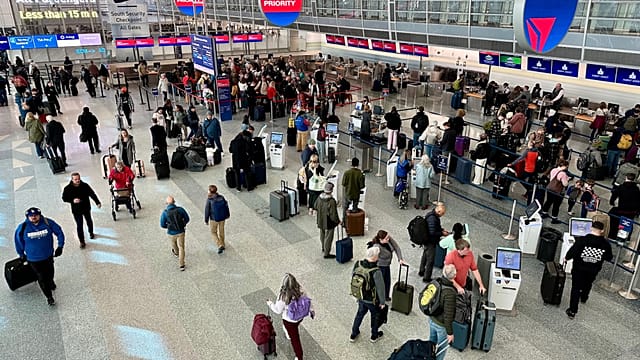
Mali and Burkina Faso say they’re shutting their doors to US citizens, a direct response to President Donald Trump’s decision to ban travelers from their countries.
Rio de Janeiro’s New Year’s Eve was officially recognized by Guinness World Records as the world’s biggest New Year’s Eve celebration, consolidating the city as a global benchmark for New Year’s festivities. The information was released on Tuesday (Dec. 30) by municipal authorities. The record was based on an attendance of 2.5 million people at Copacabana Beach during the turn of 2024 to 2025.
Mayor Eduardo Paes officially received the title on Tuesday (30), on the main stage of the 2026 New Year’s Eve celebrations in Copacabana. The commemorative plaque was presented by Camila Borenstein, a Guinness adjudicator.
Paes said it was an honor to receive the recognition. “We know that no city in the world holds events for so many people and with such frequency as Rio de Janeiro. In addition to the numbers, we must also highlight the qualities of the New Year’s Eve celebration, such as the joy of the cariocas and the musical diversity.”
The title was awarded based on criteria established by Guinness, including the record number of participants, the magnitude of the artistic program, the territorial extent of the event, and its cultural relevance.
Borenstein said that the title was awarded to the city of Rio after the institution received evidence, including drone footage, proving the record attendance of 2.5 million people at the New Year’s Eve celebration. “It is an honor to say that you are part of Guinness and that you are, once again, officially amazing.”
New dimensions
The 2026 New Year’s Eve party in Copacabana will, for the first time, feature new visual dimensions, with unprecedented structures, more technology, and renewed scenography, according to the municipal administration. For the fireworks display, 19 barges will be used along the coastline - almost double the number used in 2024 - delivering a 12-minute pyrotechnic show, the largest ever held in Rio.
The show will also include a display of 1,200 drones in honor of the city, with images synchronized with the fireworks and a special soundtrack by DJ Alok.
Three stages will be set up on the sand at Copacabana, with ten more installed in other areas of the city. In total, more than 70 attractions will liven up the New Year’s Eve celebrations in Rio.
Bets for the Mega da Virada draw, both in person and online, will close at 8 p.m. (Brasília time) this Wednesday (Dec. 31). The estimated prize for this year-end contest is around USD 180.5 million, the largest in the Brazilian lottery’s history.
This special draw takes place annually on New Year’s Eve. Bets can be placed at more than 13,000 lottery outlets nationwide, through the Caixa website, and via the Caixa lottery app. Bank customers can also use internet banking.
The event will take place at 10 p.m. and will be broadcast on the Caixa Lotteries Facebook page and Caixa’s YouTube channel. A simple bet of six numbers costs approximately USD 1.
The Mega da Virada prize does not roll over. If there are no winners in the six-number category, it will be distributed among those who correctly guessed five numbers in the next tier, and so forth.
Since its first edition in 2009, the Mega da Virada has paid out 130 prizes to bets that correctly matched all six numbers.
The decision sparked outrage and has been the subject of extensive investigation in the weeks since, especially after it transpired that some of the intelligence in the police’s report was bogus.
Números de siete pies de altura para "2026" se exhiben antes de la celebración de la víspera de Año Nuevo en Times Square. - TIMOTHY A. CLARY/AFP/AFP via Getty Images
Esta podría ser una respuesta para un programa de concursos para ganarte el premio mayor: los grupos de islas del Pacífico de Samoa y Kiribati comparten la distinción anual de ser los primeros en el mundo.
Y la pregunta correcta sería: ¿dónde se celebra primero el Año Nuevo?
Gracias a las posiciones cercanas a la línea internacional de cambio de fecha, que se traza irregularmente, estos dos destinos polinomios, que están ubicados aproximadamente a mitad de camino entre Hawái y Nueva Zelandia, son los primeros en la fila para recibir el Año Nuevo.
Safari Martins is one of Kenya's most renowned barbers. He has shot to viral fame, gaining some one million followers on Tiktok and Instagram with his unconventional techniques.
Selling calendars with political leaders has become a familiar tradition ahead of Novy God, Russia’s biggest winter celebration, a holiday that dates back to Soviet times when New Year replaced Christmas as the main festive event.
Sexual violence against children is endemic, systemic, and worsening across the Democratic Republic of the Congo (DRC), the United Nations children’s agency said on Tuesday.
One of Brazil’s most iconic races reaches its 100th edition this year: the São Silvestre. Created in 1925 by businessman and journalist Cásper Líbero, the competition has spanned a century and established itself as one of the most prestigious sporting events in Brazil and Latin America.
The run has crowned memorable athletes and become a symbol of celebration and community on the streets of São Paulo, attracting thousands of professional and amateur runners with each edition.
Inspired by street races that Cásper Líbero witnessed in Paris, the first edition featured 48 runners. Journalist and executive director of the São Silvestre race, Erick Castelhero, explains that the contest already had one of its most famous characteristics from the very beginning.
“The idea was always to connect the last night of the year with New Year’s Eve and already usher in the new year. Perhaps Cásper did not imagine that [the race] would become what it is today.”
In the early editions, only Brazilian athletes competed. The first winner was Alfredo Gomes. The grandson of enslaved people, he was also the first black Brazilian athlete to take part in the Olympic Games. In 1945, foreign runners began participating in the competition.
Following this change, Brazil went decades without winning the run. The drought ended in 1980 with the historic victory of José João da Silva. A São Paulo Futebol Clube athlete, he recalls the impact of that title, taking the lead in the final meters.
“To tell the truth, I had no idea of the magnitude of the victory. It stopped the country - it was like a World Cup. That victory was a major milestone.”
Five years later, the athlete won the race again, becoming one of the few Brazilians to achieve this feat.
The most successful runner in the São Silvestre is Portuguese athlete Rosa Mota, who achieved six consecutive victories in the early 1980s - Paulo Pinto/Agência Brasil
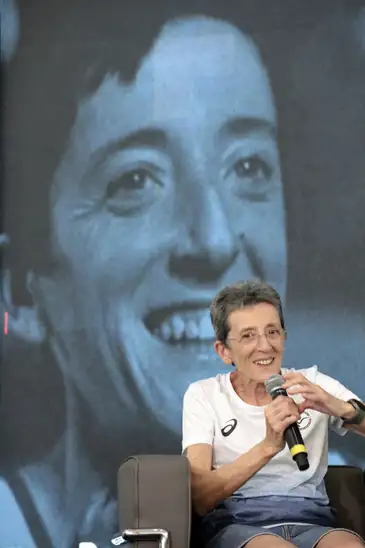
The growth of the São Silvestre race and its competitive level attracted athletes from around the world. Mexican runner María del Carmen Díaz, a three-time São Silvestre champion (1989, 1990, and 1992), trained in a volcanic region near her hometown of Toluca. In São Paulo, she overcame the 30-degree heat to win the first São Silvestre held in the afternoon. She fondly recalls the support of the crowds along the streets:
“I truly admire the Brazilian public because, as I’ve always said, I’ve been more recognized in another country than in Mexico itself. I feel proud because there are runners - men and children alike - who tell me that, because of me, they practice sports and enjoy running.”
It was only from the 51st edition onward that the São Silvestre competition began to include a women’s event. The most successful runner in the São Silvestre is Portuguese athlete Rosa Mota, who achieved six consecutive victories in the early 1980s. The second-highest number of wins was in the men’s event: Kenyan Paul Tergat claimed five victories. Among Brazilian runners, Marílson Gomes dos Santos won three times.
Popular phenomenon
Over the course of a century, the São Silvestre has also become a popular phenomenon. Thousands of amateur athletes from across the country gather on Paulista Avenue to celebrate the New Year, pushing their own limits and sharing a passion for running.
To mark its centenary, this year’s São Silvestre run will be the largest edition in history. Around 55,000 participants are expected, with races for women, men, and people with disabilities, as well as the São Silvestrinha - an event that brings together 2,000 children and teenagers from across the country, forming a new generation passionate about running.
A rare dispute between Saudi Arabia and the UAE erupted after Riyadh launched airstrikes in Yemen, accusing Abu Dhabi-backed forces of threatening stability by seizing territory.
La Vela cubana despide el 2025 con buen comienzo y cierre de año, primero con la exaltación de Nélido Manso al Salón de la Fama de la clase Snipe –no olímpica- y después con los dos cupos conseguidos para los Juegos Centroamericanos y del Caribe de Santo Domingo 2026.
En enero la familia de ese deporte recibió la merecida noticia de que Manso, campeón mundial de Murcia 1999, resultó el seleccionado en nota publicada en la página oficial de la Asociación Internacional de Snipe (SCIRA), por sus siglas en inglés).
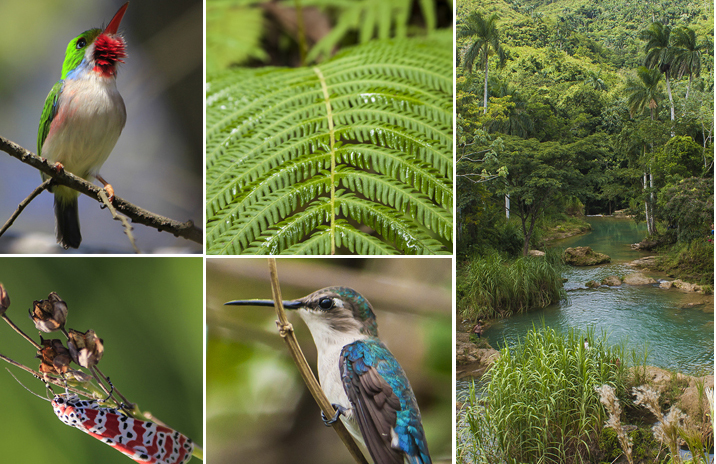
La diversidad de ecosistemas y hábitats existentes en el archipiélago cubano posibilita que las aves se distribuyan por todo su territorio, según expertos del Programa Nacional sobre la Diversidad Biológica, coordinado por el Ministerio de Ciencia, Tecnología y Medio Ambiente.
Hasta 2024 están registradas en el país más de 400 especies, de las cuales 158 crían en sus correspondientes áreas, donde interactúan con su ambiente abiótico, refirieron en un comentario sobre el particular.
El presidente belaruso, Alexandr Lukashenko, calificó hoy de “terrorismo salvaje” el reciente ataque ucraniano con drones contra la residencia del líder ruso, Vladimir Putin, en la provincia de Nóvgorod.
«Es el terrorismo más salvaje, al más alto nivel estatal. Si es así como se está presentando. Y me pregunto, ¿quién lo necesita?», declaró Lukashenko ante la prensa al comentar dicho ataque.
El ministro de Relaciones Exteriores de Cuba, Bruno Rodríguez, repudió hoy las sanciones aplicadas por el Gobierno de Estados Unidos a personas y empresas de Venezuela e Irán.
«Rechazamos nuevas medidas coercitivas unilaterales impuestas por el gobierno de EEUU contra Venezuela e Irán, que son contrarias al Derecho Internacional y persiguen aumentar la presión y las agresiones contra ambos países», escribió el canciller cubano en la red social X.
 Войти
Войти